
Murrieta, CA · Garage Door Service
Is Your Older Murrieta Garage Door Worth Fixing, or Done
Murrieta's housing mostly dates from 1974-2009, median 1984 - here's how that age and this area's moderate heat decide whether a repair or a replacement makes sense.
- Repairs & new doors
- Springs & openers
- Serving 6 nearby communities
What Local Conditions Do
Most houses on this side of the county went up between 1974 and 2009, with the median landing around 1984. That's not a small window - it means a lot of garage doors here are somewhere between 15 and 50 years old, and a huge share of them are sitting right in the range where torsion springs, rollers, and cable drums start wearing out together instead of one at a time. Across the 22 nearby areas we see jobs in, the stock runs mostly 1980s and 90s construction, so the same failure pattern shows up house after house: original hardware that's never been touched, now tired all at once.
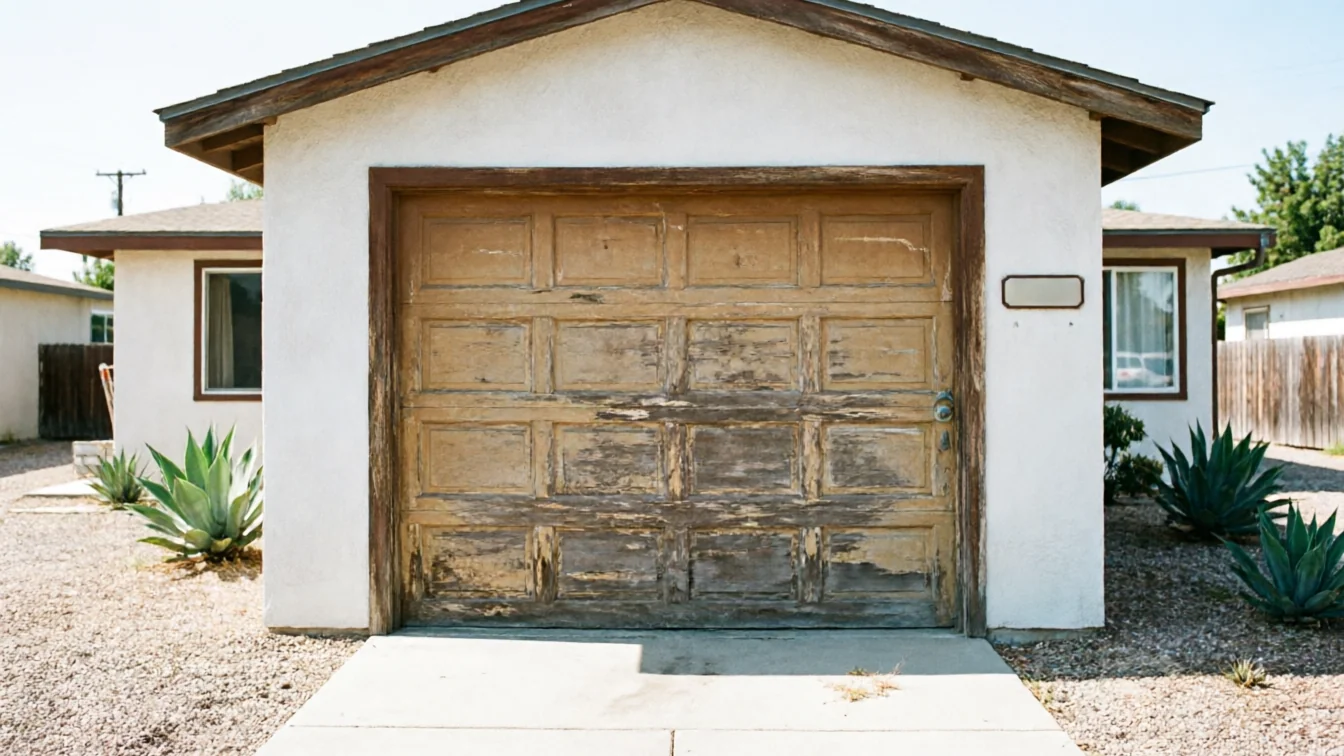
The climate here sits in the moderate heat band, not the extreme end. That matters for what breaks and what doesn't. A door in a climate with big heat swings warps panels and dries out seals fast. Here, the panel itself usually outlasts the moving parts - springs cycle, rollers wear, cables fray from age and use, not from the sun beating on them. So when we show up to an older door, the box and the panels are often fine. It's the torsion spring, the rollers, and the opener gear that are worn out.
The Cost of This Job
With 66,266 owner-occupied houses in this service area and a median household income of $84,369, most owners here aren't deciding between a repair and skipping it entirely - they're deciding between a repair and a full replacement. That's the real question on a door from the 1980s or 90s: do you fix the parts that failed, or is the door itself at the end of its run.
We don't have a flat price to quote you here, and we wouldn't trust a number that didn't come from looking at your actual door - spring size, drum type, whether the track is bent, whether the opener is original. What we can tell you is that a worn torsion spring and rollers on an otherwise sound panel is almost always the cheaper path, and on a door built in that 1974-2009 window, the panel is usually still sound. A full replacement only starts making sense when the track, the panel, and the opener are all original and all failing at once - not just one part.
The Problem
On houses built in that 1984-median window, the parts that fail are predictable: a torsion spring that's done its last few thousand cycles, rollers that have gone from steel-on-steel to grinding, a cable that's starting to fray at the drum. None of that is dramatic - it's just age. The door gets heavier to lift by hand, the opener strains and makes a new noise, or the spring finally lets go and the door won't move at all.
What we don't see as much here is heat damage to the panel itself, because the climate band is moderate, not extreme. So the common mistake is an owner assuming a stiff, noisy door means the whole unit is shot and needs replacing, when it's really the spring and rollers - original hardware from a house built decades ago, worn exactly as much as you'd expect and no more. That's a repair, not a replacement, in most cases we see on doors from this era.
When Waiting Is Fine
Not every noise is an emergency. If a door from the 1980s or 90s is just loud - rollers grinding, opener straining a little - and it's still opening and closing on its own, it's fine to wait a few weeks and get it looked at rather than drop everything. The honest limitation here is that we can't tell you over the phone whether a noisy door is a $40 roller problem or a spring about to snap; that only shows up in person.
Where waiting stops being fine is a door that's stopped balancing - one side drops faster than the other, or it won't stay open on its own. That's a spring problem, and a spring under tension that's failing is the one thing on this list that can hurt someone. Everything else - a slow opener, a worn weatherstrip, a dent in a panel - can sit on a list. A door that won't hold its own weight can't.
Frequently asked questions
My house was built in the 80s. Is my garage door original?
A lot of them are. Houses across this area median out around 1984, and original hardware - springs, rollers, the opener - commonly makes it 30 to 40 years before it needs real work. If nobody's touched the springs or rollers since the house was built, age alone is enough reason to get it checked.
Does the heat here wear out garage doors faster?
Not really - this area sits in the moderate heat band, not an extreme one, so panels and seals hold up better than they would somewhere with bigger heat swings. What wears out here is mechanical: springs, rollers, cables - parts that fail from cycles and age, not sun exposure.
How do I know if it's worth fixing versus replacing?
If the panel and track are sound and it's the spring, rollers, or cable that failed, repair almost always makes sense - especially on a door from the 1974-2009 era, where the box itself usually still has life left. Replacement starts making sense when several original parts are failing at the same time.
Related garage door services in Murrieta
More garage door guides
Book garage door service in Murrieta
Call now or request a quote - tell us what the door is doing and where you are.