
Murrieta, CA · Garage Door Service
What an Older Opener Means When the Power Goes Out
Murrieta homes built mostly in the 1980s and 90s often pair standard garage openers with no battery backup, which matters most during a summer power outage.
- Repairs & new doors
- Springs & openers
- Serving 6 nearby communities
What Local Conditions Do
Most of the garage openers we see in Murrieta came with the house, and most of those houses went up between 1974 and 2009, with the heaviest building years clustered in the 1980s and 90s across the 22 named pockets of the service area. That means a big share of the openers out there are original chain-drive units with no battery backup wired in - backup power simply wasn't standard equipment when these units shipped. Add in the moderate-heat climate band this part of the county sits in, and you've got plastic drive gears, belt material, and capacitors that have been cycling through hot garage air for three decades or more. Heat doesn't break an opener overnight. It dries out lubricant, warps nylon gears a fraction at a time, and shortens the life of the start capacitor that gets the motor moving. None of that shows up as a sudden failure - it shows up as a slow grind, then a hum with no movement, usually on the hottest afternoon of the month when the motor is working hardest and the air in the garage is thickest. If your opener is original to a house from that build window, age and heat are doing the work together, not separately.
The Cost of This Job
We won't put a number here we can't stand behind - what a visit runs depends on whether this is a worn drive gear, a dead capacitor, a logic board, or a full opener swap, and we don't know which until we're looking at the unit. What we can tell you is what drives the cost up or down. A straight gear-and-sprocket kit on a chain-drive unit from the 1980s or 90s is usually the cheapest fix, if the motor itself is sound. A battery backup add-on costs more up front but matters here specifically because so many of these original units never had one. Full replacement costs more than a repair, obviously, but makes sense once the motor windings or logic board are the actual failure point, since those aren't cheap to source separately for an opener that old. One honest limit: on some of the oldest original units, the exact rail or gear kit isn't something we can get same-day - parts for a 30-plus-year-old opener sometimes mean a short wait, and we'll tell you that up front rather than promise a fix we can't deliver that day.
The Problem
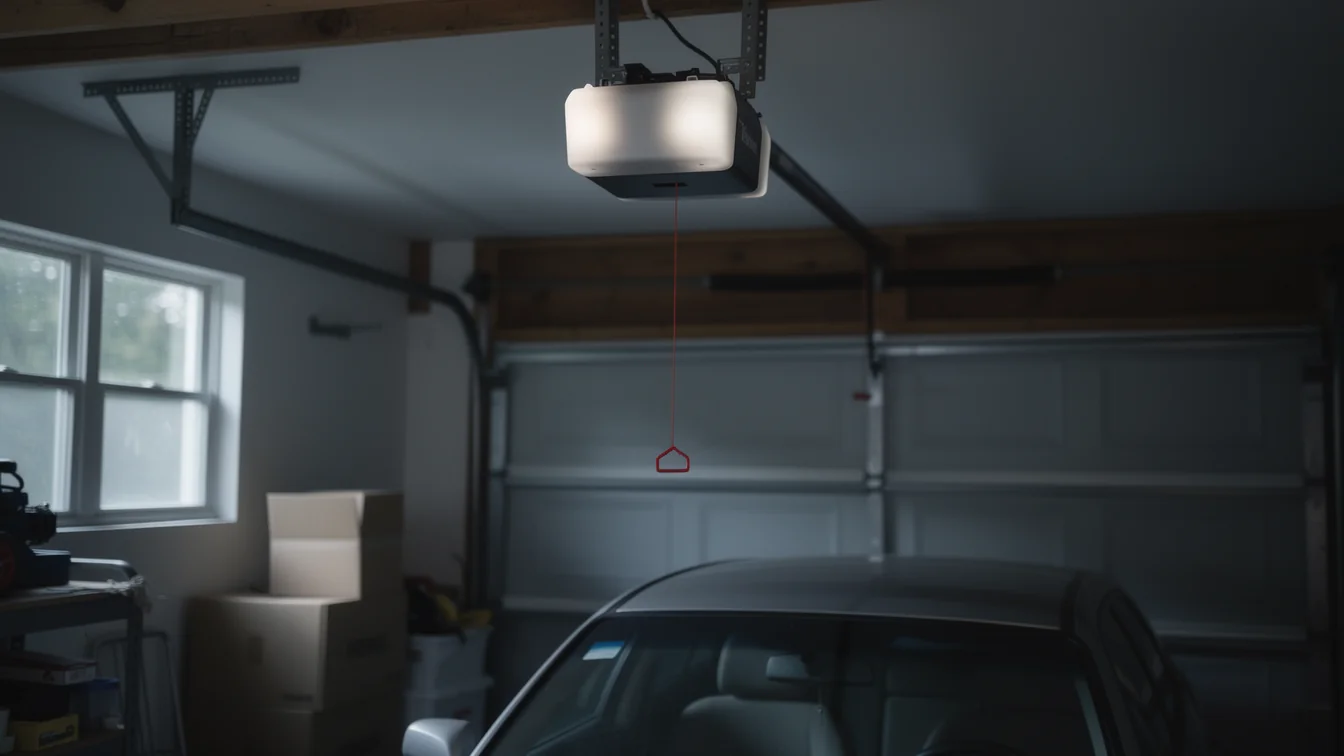
Here's the actual failure most Murrieta homeowners run into: the opener dies, or the motor just hums, right when the power also goes out - because both are heat-driven events. A worn drive gear or a failing capacitor is already weak from years of summer heat cycling through the garage, and a grid interruption or breaker trip is the final push. If the opener has no battery backup, which is the norm on original units from the 1980s and 90s building wave this area saw, you're stuck. Manual release works, but only if you know where the release cord is and the door isn't already jammed on a bad roller or bent track, which is common on original hardware this age. With 66,266 owner-occupied houses across the service area, this isn't a rare combination - original opener, no backup, moderate-heat climate - it's the default setup for a large share of driveways out here. The fix isn't complicated once you know what you're dealing with: either add backup power to the existing unit if the motor's otherwise sound, or replace the opener outright if the motor or board is the actual failure point. Guessing which one it is from the driveway isn't something we'll do - that's a hands-on call.
When Waiting Is Fine
Not every slow or noisy opener needs a same-week fix. If yours still opens and closes reliably, just a little louder or slower than it used to, that's wear, not failure, and it's fine to keep an eye on it rather than replace it. Battery backup is worth adding if outages are a real inconvenience for you - needing to get a car out, or not wanting to crawl under the door to release it manually - but if you rarely lose power, or you don't mind the manual release when it happens, skipping the backup unit is a reasonable call, not a mistake. The same goes for homes in Wildomar, French Valley, Canyon Lake, and the other communities within a few miles of Murrieta that share this same 1980s-to-90s housing stock: an original opener that's still running smooth doesn't need to be swapped just because of its age. Where we'd push you to act sooner rather than later is if the opener is already struggling on hot afternoons, since that pattern tends to end in a dead motor on the worst possible day, not a gradual slowdown you can plan around.
Frequently asked questions
Why doesn't my opener have a battery backup already?
If your house was built in the 1980s or 90s, which covers a large share of homes in the Murrieta area, battery backup simply wasn't standard equipment on garage openers at the time. It's an add-on, not a defect. If outages are a hassle for you, we can usually add a backup battery to many existing chain-drive units without a full opener swap.
Is heat actually what's killing my opener?
Heat doesn't kill an opener on its own, but it accelerates wear that's already happening - drying lubricant, warping nylon gears, shortening capacitor life. In this climate band, an opener from the 1980s or 90s has had three-plus decades of summer heat working on those parts, which is why failures often show up as a slow decline, not a sudden break.
Can I just use the manual release during an outage?
Yes, as long as you know where the release cord is and the track and rollers are in decent shape - original hardware from older Murrieta homes sometimes has enough wear that manual operation is stiff or uneven. If it jams or won't move smoothly by hand, that's a separate problem from the opener and worth a look before you rely on it.
Related garage door services in Murrieta
More garage door guides
Book garage door service in Murrieta
Call now or request a quote - tell us what the door is doing and where you are.