
Murrieta, CA · Garage Door Service
Weather Seals and Drafts in Murrieta Garages
Murrieta homes built mostly between 1974 and 2009 have original bottom seals worn thin by years of heat. Here's what that costs to fix and when it can wait.
- Repairs & new doors
- Springs & openers
- Serving 6 nearby communities
What Local Conditions Do
Most garages in this part of Murrieta sit in houses built between 1974 and 2009, with the median home dating to 1984. That means a lot of original bottom seals and side weatherstrip are now thirty to fifty years old, installed long before anyone thought about how long vinyl lasts under direct sun. The climate band here is moderate heat, not the hard freeze-thaw cycle that cracks seals in cold states, but years of consistent sun exposure still does the job slower and just as thoroughly. UV breaks down the rubber compound in bottom seals until they go stiff and start pulling away from the slab instead of flexing against it. On a door with the original 1980s-era track and jamb, that gap under the door isn't a draft problem the way it would be up north - it's a dust, bug, and radiant heat problem. Open the door at midday and you can usually feel warm air pushing in around the top corners where the stop molding has shrunk away from the panel. That gap also lets in the fine dust that collects on everything stored near the garage door. None of this shows up overnight. It's a slow fade that most owners notice only when they finally crouch down and look at the seal edge-on.
The Cost of This Job
We don't have a flat number for this specific repair in our records, so I won't invent one here - bottom seal and side weatherstrip jobs vary by door width and whether the track or stop molding needs attention at the same time, and pricing it sight unseen would be a guess, not a fact. What I can tell you is what drives the cost up or down. A single-car door with straight track and no rust at the jamb is a short job. A double-car door where the stop molding has warped away from the frame, or where the original 1980s track has enough play that the door doesn't sit flush anymore, takes longer because you're correcting alignment before the new seal will even hold a seal against the slab. Given that median household income here runs $84,369, most owners treat this as routine upkeep rather than an emergency call - it's the kind of job you schedule, not the kind you panic over. If your door is from the original build era and has never had the seal replaced, budget for both the seal and an inspection of the track while the tech is already down there.
The Problem
The actual failure point is almost always the same on houses from this build era: the bottom seal has hardened and shrunk, and the side jamb weatherstrip has pulled loose from decades of expansion and contraction in the heat. On a door installed when the house was built in the 1970s through 2000s, the stop molding is usually wood or thin aluminum, and over that many summers it bows slightly away from the frame. Once that gap opens, no seal replacement alone fixes it - you're sealing against a surface that's no longer straight. That's the part owners miss. They buy a seal kit, press it on, and the gap is back within a season because the molding behind it moved first. The honest fix is to check the jamb and track alignment before buying any seal material, because a new seal pressed against a warped frame just fails faster than the old one did.
When Waiting Is Fine
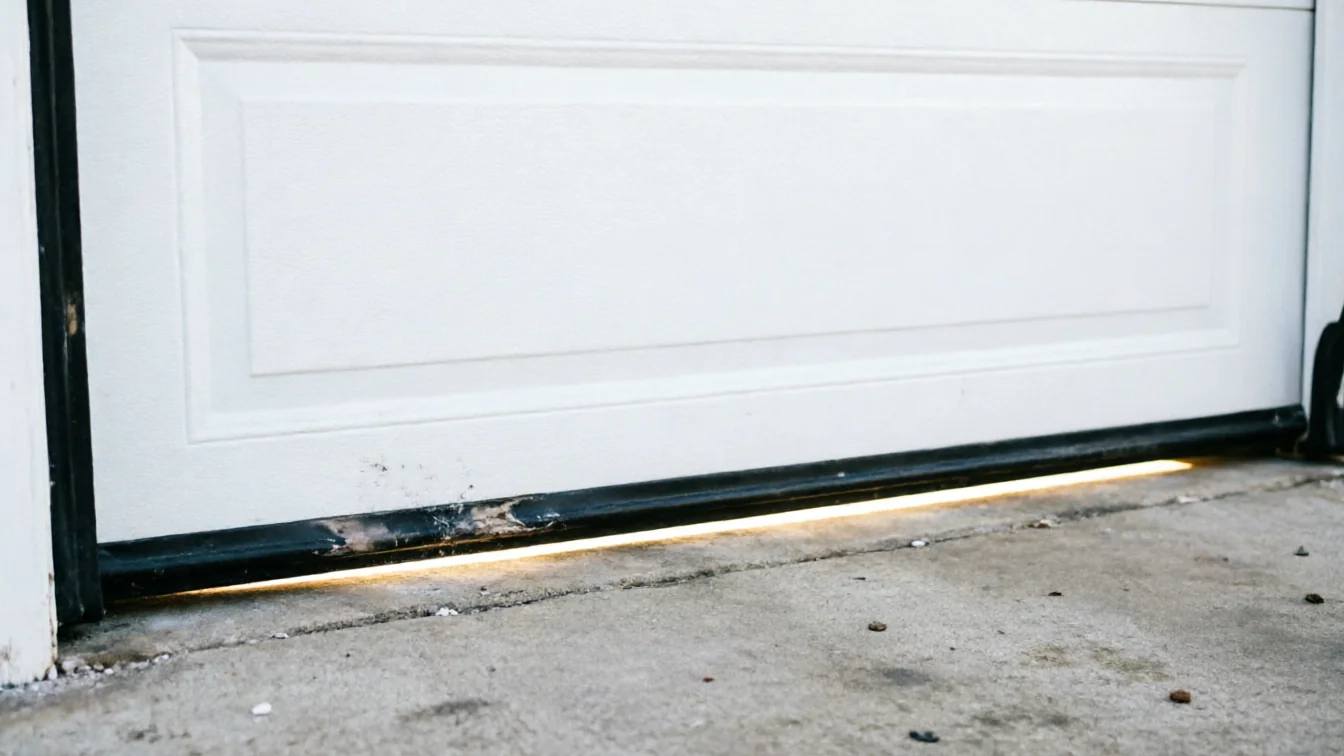
If the seal is just getting stiff but still sits flat against the slab with no visible light gap, you can wait. Stiff rubber that still makes contact is doing its job even if it's not supple anymore, and replacing it a season early doesn't buy you anything. Where I'd push you to act sooner: if you can see daylight under the door at any point, or if the side weatherstrip has curled away from the jamb enough that you can fit a finger behind it, that gap only gets wider with another summer of heat cycling. Houses built earlier in the 1974-2009 range are more likely to be at that tipping point than newer builds in the same stretch, simply because the original material has had more summers to work with. One honest limitation: we can't tell you from a phone call whether your jamb is straight or warped - that's a five-minute look-and-tell, not a guess, so if you're unsure it's worth having someone actually look rather than ordering a seal kit and hoping.
Frequently asked questions
Why does my garage door let in so much dust even when it's closed?
On houses in this area built from the 1970s through 2000s, the original bottom seal and side weatherstrip are old enough to have hardened and pulled away from the frame. That gap is usually where dust and fine debris are getting in, not a problem with the door panel itself. Checking the seal and jamb alignment usually finds it.
Does Murrieta's climate wear out garage door seals faster than normal?
The moderate heat band here means seals don't crack from freeze-thaw cycles the way they do in colder states, but years of consistent sun exposure still stiffens and shrinks the rubber over time. A seal installed when a 1980s-era house was built has typically had decades of that heat cycling to work through.
Is a new seal enough, or does the track need attention too?
Depends on the door. If the stop molding or jamb has bowed away from the frame over the years, a new seal alone won't hold a tight line against the slab. It's worth having someone check alignment before buying seal material, especially on an original door from the home's build era.
Related garage door services in Murrieta
More garage door guides
Book garage door service in Murrieta
Call now or request a quote - tell us what the door is doing and where you are.