
Murrieta, CA · Garage Door Service
When a Garage Door Spring Breaks on a Cold Murrieta Night
Murrieta homeowners: when a garage door spring breaks after a cold night, here's why it happens, what it costs, and when you can safely wait to call.
- Repairs & new doors
- Springs & openers
- Serving 6 nearby communities
What Local Conditions Do
Most of the houses we work on in Murrieta went up between 1974 and 2009, with the median build year sitting around 1984. That spread covers roughly 22 named neighborhoods and nearby communities we see calls from, and most of that stock is still running 1980s and 90s garage door hardware - the original torsion spring, or a direct swap from twenty years back. Murrieta sits in a moderate-heat climate band, not a hard-freeze zone. That matters because the stress on these springs isn't from brutal cold the way it is in mountain towns. It's from thousands of hot afternoons, year after year, that take the temper out of the steel. A spring that's already fatigued from heat cycling doesn't need a deep freeze to let go - it just needs one cooler night where the metal contracts a little more than it has in months. That's usually the night it snaps. The age of the housing stock and the climate band together are why cold mornings here produce a cluster of spring calls even though winter in Murrieta is mild by most standards.
The Cost of This Job
We don't have a flat number to put here, because spring size, door weight, and whether one or both springs need replacing all change the job. What we can tell you is who's asking. Our service area runs about 116,195 households, with 66,266 of those owner-occupied houses - meaning most of the people calling about a broken spring own the garage it's attached to, not renting and waiting on a landlord. Median household income across the area is $84,369, which is part of why a lot of homeowners choose to replace both springs at once rather than patch the one that broke, since the second one is usually close behind it on the same age and use cycle. A straight honest limitation: we don't keep every older spring wire-size in the truck, since houses built across that 1974-2009 range used a handful of different spring specs over those decades. If yours is an odd one, that can mean a short wait on the part.
The Problem
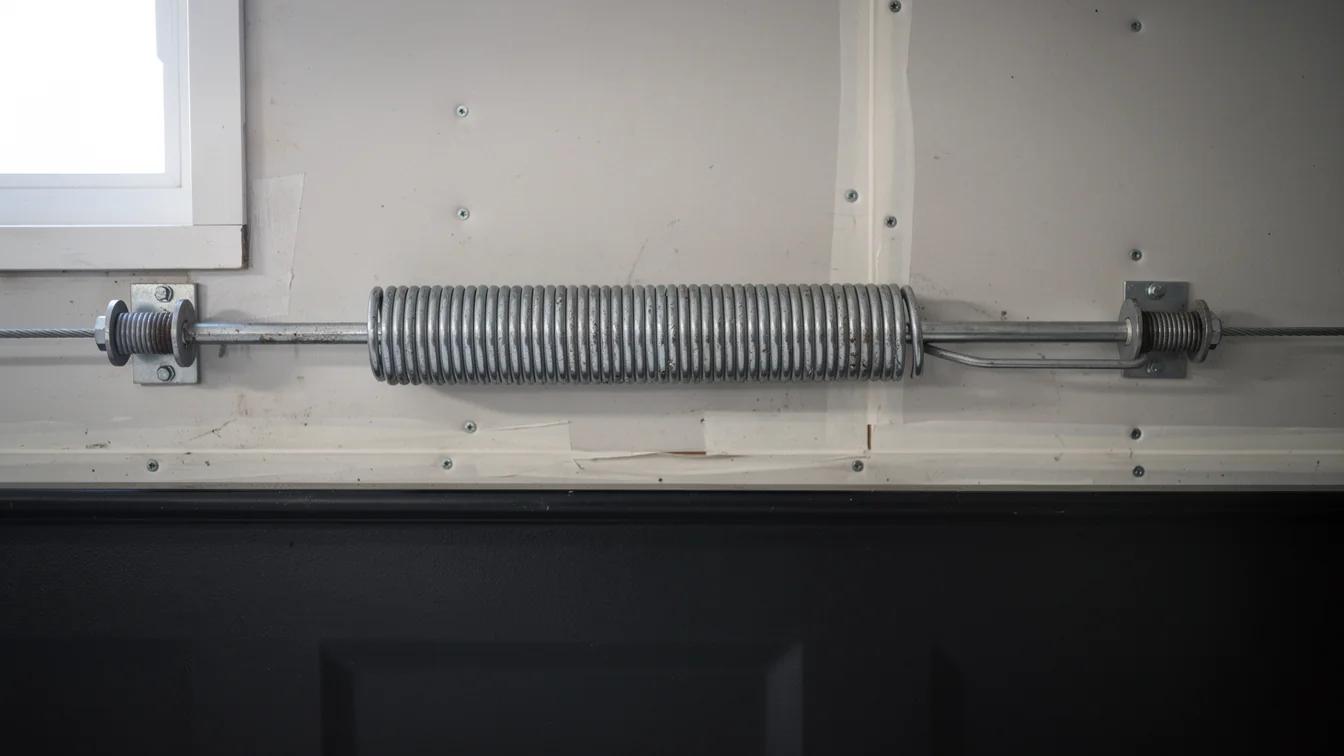
Here's the actual mechanism. A torsion spring is wound steel under constant tension, and every open-close cycle works it a little. In a moderate-heat climate like Murrieta's, most of that wear happens slowly, from expansion and contraction through long hot stretches rather than violent cold snaps. But steel that's already near its limit from years of that heat cycling doesn't need much of a push to fail - a cooler night, even a mild one by other standards, stiffens the metal just enough to be the final straw. That's why you'll get calls clustered on cooler mornings even in a place that never sees a hard freeze. The spring was going to go. The cold snap just picked the morning. If your garage was built anywhere in that 1974-2009 range and nobody's touched the springs, the hardware is old enough that this isn't really a weather story - it's an age story that weather happens to expose.
When Waiting Is Fine
If the door is still moving and you're just hearing a new creak or seeing a slight sag on one side, that's not an emergency. A spring under high tension that's already failed is the thing you don't wait on - but a spring that's simply aging and hasn't broken yet can wait for a scheduled visit instead of a rush call. Given Murrieta's moderate climate, there's no ticking clock the way there would be in a place facing real hard freezes overnight; the metal isn't going to seize up on you. What doesn't make sense to wait on is a door that's already dropped and stuck halfway, or a spring that's visibly separated - at that point the cables and opener are carrying load they weren't built for, and every extra cycle on the opener risks a second repair stacked on the first.
Frequently asked questions
Does cold weather actually cause spring breaks in Murrieta
Not the way it does in colder climates. Murrieta sits in a moderate-heat band, so winters here are mild. What really drives spring failure is years of heat cycling wearing the steel down - a cooler night can be the final trigger on a spring that was already near the end of its life, not the root cause.
How old is a typical garage door spring in a Murrieta home
Housing in our service area was mostly built between 1974 and 2009, with a median around 1984. A lot of those original springs or their first replacements are well past typical cycle life by now, which is why age, not weather, is usually the real story behind a sudden break.
Should I replace one spring or both
If your door has two springs and one just broke, the other has seen the same age and the same number of cycles. Many homeowners in this area choose to replace both at once rather than call again in a few months, though it depends on the specific springs and how they were installed.
Can I wait a few days if the door still opens
If the door is operating but showing new noise or a slight lean, waiting for a scheduled visit is reasonable in this climate. If the door has dropped, stuck, or the spring has visibly separated, that's not a wait-and-see situation - the cables and opener are carrying extra load they weren't built for.
Related garage door services in Murrieta
More garage door guides
Book garage door service in Murrieta
Call now or request a quote - tell us what the door is doing and where you are.