
Murrieta, CA · Garage Door Service
Why So Many Murrieta Garage Doors Predate Insulation Rules
Most Murrieta homes went up between 1974 and 2009, median year 1984, before current insulation rules. Here's what that means for your garage door.
- Repairs & new doors
- Springs & openers
- Serving 6 nearby communities
What Local Conditions Do
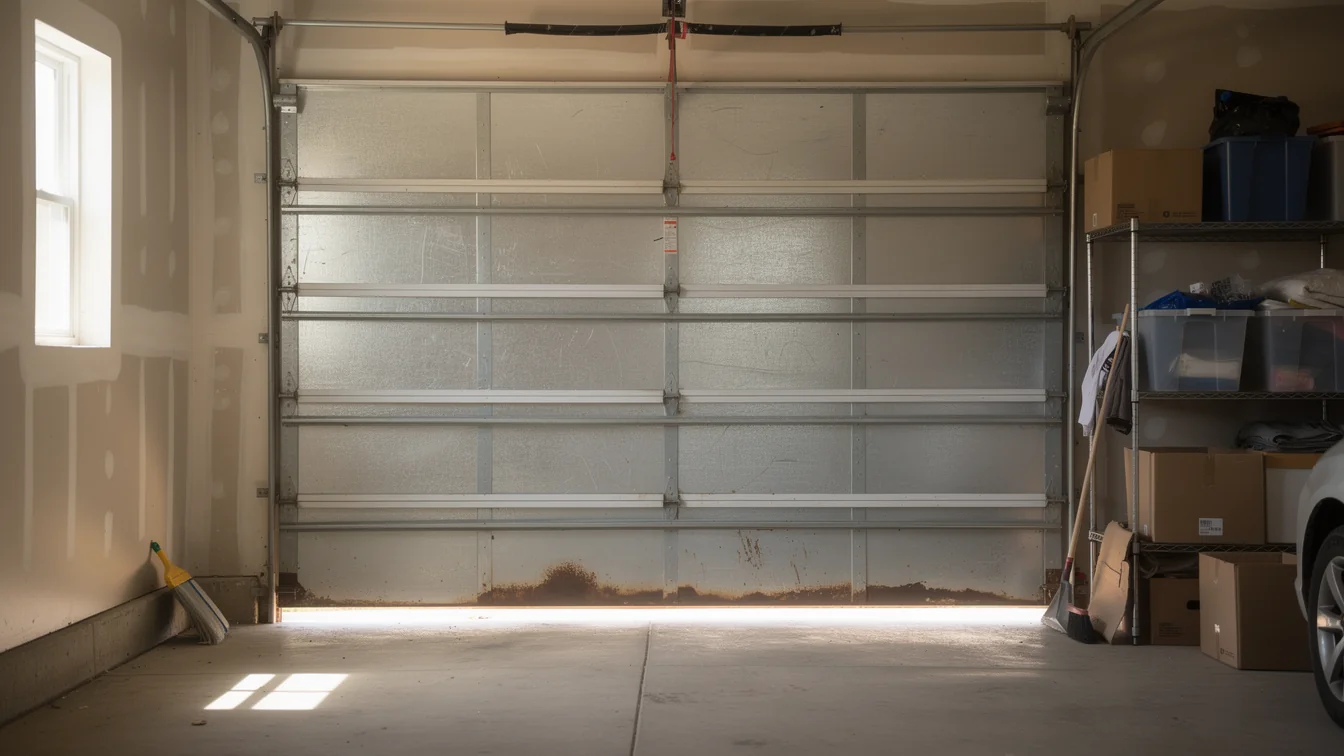
Murrieta's housing stock runs from 1974 to 2009, with the median home built around 1984. That matters more than most owners realize, because insulation requirements for garage doors tightened up well after that median build year. A door installed when the house went up is often a single layer of stamped steel with no foam core at all - it keeps rain out and that's about it.
Across the 22 named areas that make up this housing stock, most of what's out there dates to 1980s and 90s construction, so this isn't a problem limited to one subdivision. It's the baseline. Murrieta sits in a moderate-heat climate band rather than one of the extreme-heat zones you'd find further out toward the desert, so the issue isn't warping or melting hardware. It's a garage that runs ten or fifteen degrees hotter than it should in summer because the door does nothing to slow heat transfer, and a slab floor that stays cold and damp in winter for the same reason.
If your door still has the thin skin and hollow sound it had when the house was built, you're not imagining the temperature swing in that room.
The Cost of This Job
I'm not going to hand you a number here - what a job runs depends on panel count, width, and whether the track and opener need work too, and none of that is a fact I can state without seeing the door. What I can tell you is how the age of the house changes the math.
With 66,266 owner-occupied houses across this service area and a median household income of $84,369, most of the calls I get aren't about failure - they're about whether to patch a thirty-plus-year-old uninsulated door or replace the whole thing with an insulated one. Patching buys you a few more years on a door that was never built to hold heat. Replacing costs more up front but changes how the garage behaves every single day, not just when something breaks.
There's no universal right answer. A door that still opens and closes clean, with springs that aren't worn, is a different conversation than one where the cable's fraying and the panels are already dented. I'll tell you honestly which one you're looking at before you spend anything.
The Problem
Here's the actual mechanical issue, not just the comfort complaint. Doors built before insulation rules tightened are single-wall steel or, on the oldest builds in this 1974-2009 range, sometimes still wood composite. Neither has a thermal break, and neither was designed with a vapor barrier between the garage and the house.
In a moderate-heat climate like Murrieta's, that doesn't crack the panel or warp the track the way it might somewhere hotter. What it does is transfer heat and cold straight through, and over enough years, temperature cycling works on the seams, the weatherstrip, and the hardware screws just like it works on any exterior surface that isn't built to shed that cycling. You end up with a door that still functions but that's doing none of the job an insulated door does, and the fasteners and seals are often the first thing to give out - not catastrophically, just enough that the door starts rattling or sealing worse than it used to.
This shows up in the same build era across the wider area too - a door from the same 1980s-90s stock in Wildomar or French Valley, both about five miles out, has the identical problem for the identical reason.
When Waiting Is Fine
Not every old door needs to come off the wall today, and I'd rather tell you that than sell you a job you don't need yet. If the door is uninsulated but the panels aren't dented, the springs are balanced, and it still opens smooth on the track, you can wait. An uninsulated door that works is a comfort issue, not a safety one, and comfort issues are the ones you get to schedule on your own timeline.
Where I'd tell you not to wait: if the bottom panel is rusting through, if the cable's showing frayed strands, or if the opener is straining and reversing because the door's heavier than the springs were ever set for. Those are mechanical failures waiting to happen, and they don't care what year the house was built.
If you're just tired of a hot garage in summer, that's worth fixing on a normal schedule, not an emergency one. Insulated replacement doors exist for exactly this situation, and there's no rush that changes the outcome - the door you need next year is the same door you'd need today.
Frequently asked questions
Why does my garage door feel so much hotter than the rest of the house?
Most houses in this area were built between 1974 and 2009, with the typical home going up around 1984 - years before garage doors were commonly insulated. A single layer of steel with no foam core does nothing to block heat transfer, so the garage runs hotter in summer and colder in winter than an insulated room would.
Do I need to replace my old door right away?
Not if it's only an insulation issue. A door that's uninsulated but still opens smoothly, with balanced springs and no rust or frayed cable, can wait on your schedule. Replace sooner if you see rust through the bottom panel, cable wear, or an opener straining against a door heavier than its springs were set for.
Is this an uninsulated door problem specific to my neighborhood?
No. The 1980s-90s build era shows up across the wider area, not just one subdivision - the same issue exists in Wildomar and French Valley, both about five miles out, since those areas share the same housing stock age.
Related garage door services in Murrieta
More garage door guides
Book garage door service in Murrieta
Call now or request a quote - tell us what the door is doing and where you are.