
Murrieta, CA · Garage Door Service
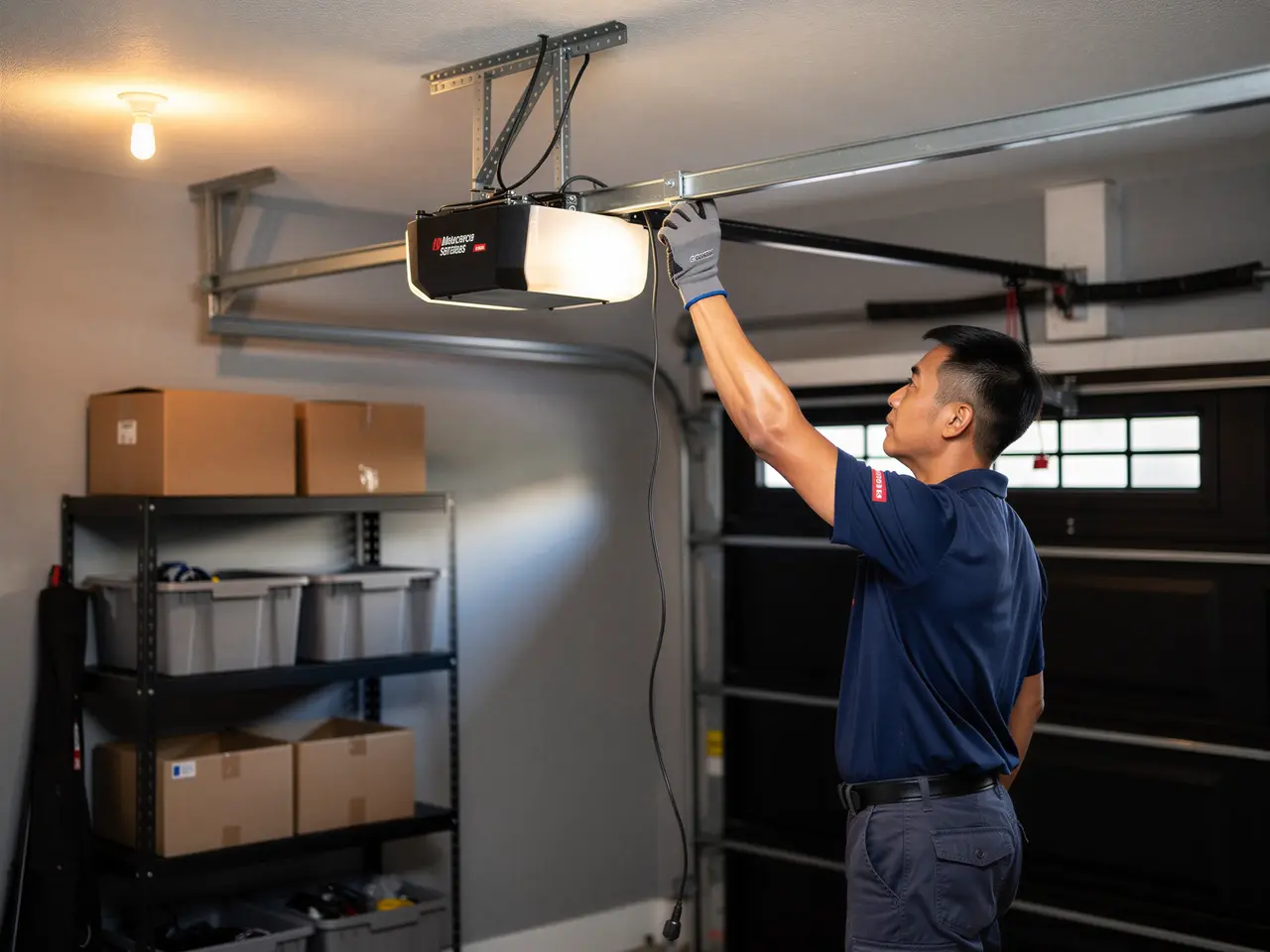
Garage Door Opener Installation for Murrieta Homes
Opener installs sized to Murrieta's 1974-2009 housing stock and moderate heat climate, covering homes across the wider Southwest Riverside service area.
- Repairs & new doors
- Springs & openers
- Serving 6 nearby communities
Where This Job Goes Sideways
Most opener jobs don't go wrong at the motor. They go wrong at the mismatch between the unit someone bought online and the door it's bolted to. Across this service area, housing went up mostly between 1974 and 2009, with the median build year sitting around 1984 and most of the 22 named communities built out in the 1980s and 90s. That means a lot of doors are original or close to it, with hardware sized for openers that don't exist on shelves anymore. A new 3/4 HP belt-drive unit will run fine on the bracket, but if the door is heavier steel or the track geometry is off from decades of settling, the opener fights the door every cycle. We see the installs fail at the travel limits and the force settings, not at the motor itself, because nobody checked what the door actually needed before bolting on a new head unit. Getting the opener right starts with reading the door it has to lift, not the spec sheet on the box.
Why This Fails Locally
The climate here runs a moderate heat band most of the year, and that matters more for openers than people expect. Circuit boards and plastic gear sets in older chain-drive units take a beating from sustained heat cycling in a closed garage, and on the stock installed through the 80s and 90s that gear wear shows up as stripped teeth and slipping drive sprockets well before the motor itself quits. Combine that with housing built before modern opener safety standards, including photo-eye and auto-reverse requirements that weren't code when a lot of these doors went in, and you get openers that technically run but don't meet current safety expectations. With 116,195 households and 66,266 owner-occupied houses in the service area, and median household income of $84,369, most owners here are replacing rather than patching, which is the right call once a board or gear set goes. The failure isn't random. It's the predictable result of heat, age, and hardware that predates the opener being bolted to it.
How It Shows Up
The symptoms are consistent enough that you can usually diagnose the family of problem from the driveway. A door that reverses halfway up, or won't close all the way and backs off an inch from the floor, points to force or limit settings fighting a door the opener wasn't matched to. Grinding or a loud pop followed by the door stalling mid-travel is almost always a stripped gear in an older chain-drive unit, common once the gear set has logged a few thousand heat cycles. A remote that works some days and not others, especially in the afternoon, often traces back to a circuit board degrading under sustained garage heat rather than a dead battery. And openers on original 1980s-90s track hardware sometimes run the motor fine while the door itself barely moves, because the real problem was never the opener. On houses from the older end of the 1974-2009 build range, we'll often find all three issues stacked on top of each other, which is why a straight opener swap without checking the door first rarely holds.
The Cost of This Job
We don't install openers blind. A straightforward swap on a door in decent shape, with working track and rollers, is quick work. A swap on a door that's been limping along on worn hardware is a different job, because the opener will just surface the door's existing problems within a few months and you'd be paying for labor twice. Where we're honest with owners: if your door is original to a house from the early end of that 1974-2009 range and the track or rollers are shot, fixing the door first costs more up front but saves you from replacing an opener that never had a fair shot. We don't carry every discontinued part for every original hardware setup, so on some of the oldest doors in this area the realistic move is updating the track hardware alongside the new opener rather than trying to make a new motor work with 1980s rail. That's a conversation worth having before the invoice, not after.
Frequently asked questions
Will a new opener fix a door that's slow or noisy?
Sometimes, but not always. If the noise or slow travel is coming from worn rollers, a bent track, or hardware that's original to a house from the 1970s-90s, a new opener will just run into the same resistance the old one did. We check the door and track before recommending a straight opener swap.
Do I need a belt-drive or chain-drive opener?
It depends on the door weight and whether there's living space above or next to the garage. We size the unit to the door itself rather than defaulting to one drive type, since a lot of houses in this area still carry original steel doors heavier than modern equivalents.
Why did my opener's circuit board fail after only a few years?
Sustained heat inside a closed garage is hard on plastic gear sets and circuit boards, especially in older chain-drive units. In a moderate heat climate like this one, that wear shows up faster than it would in a cooler region, which is part of why boards and gears are common failure points here.
Can you install an opener on an older original door?
Usually yes, but if the track or rollers are worn from decades of use, we'll flag that before the install. Bolting a new opener to hardware that's failing just moves the problem from the motor to the door within months.
Related guides
By Neighborhood
Opener Installation across the Murrieta area
We also handle opener installation in these Murrieta-area suburbs.
Book garage door service in Murrieta
Call now or request a quote - tell us what the door is doing and where you are.