
Murrieta, CA · Garage Door Service
Garage Door Off Track: Why It Happens So Often in Murrieta
A garage door that's jumped its track is common in Murrieta's 1980s-and-later tract housing. See why it happens here and what the fix runs.
- Repairs & new doors
- Springs & openers
- Serving 6 nearby communities
Where This Job Goes Sideways
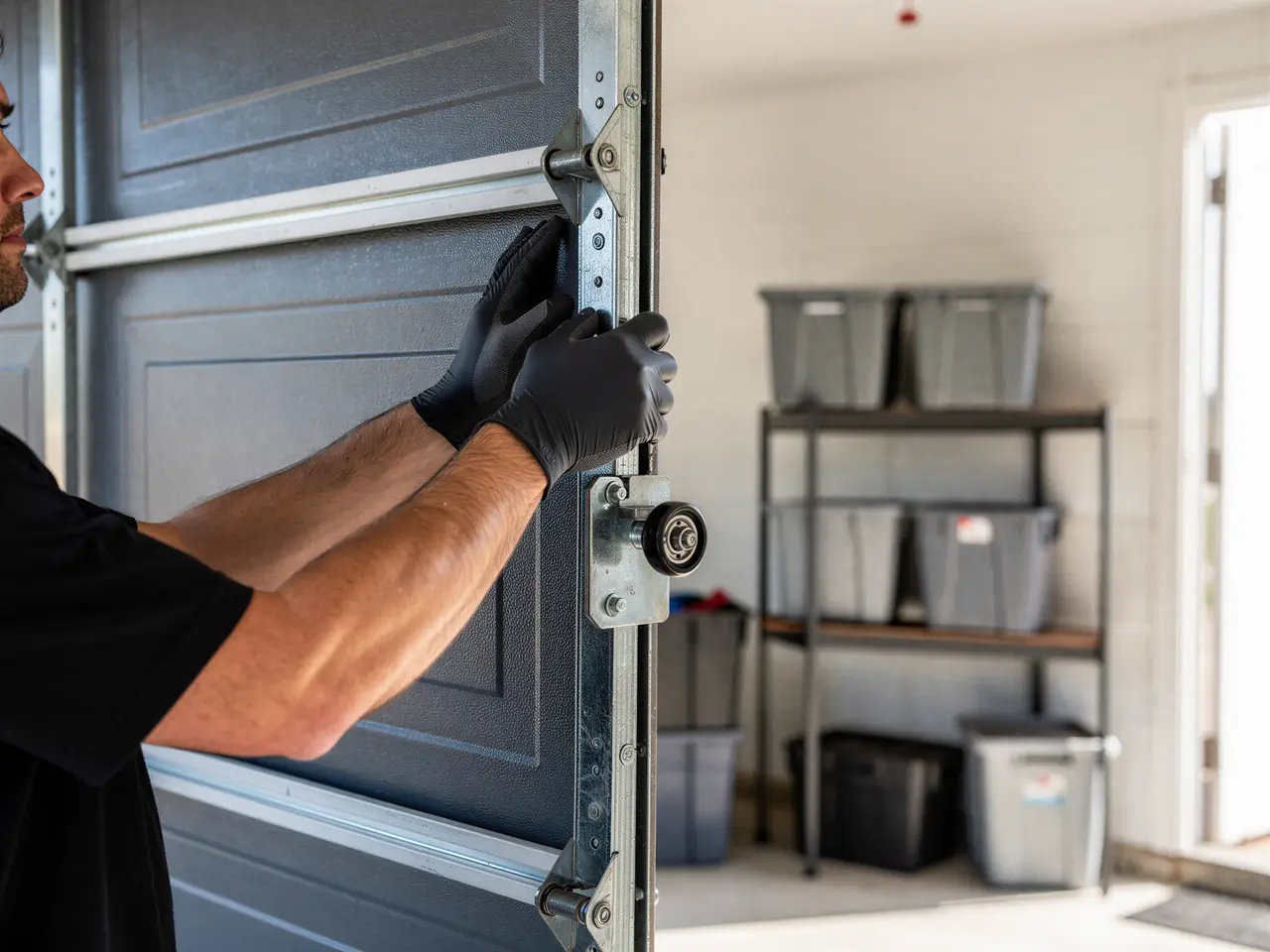
A door off track almost never starts as a dramatic event. It starts small: one roller rides up on the track flange, the door binds for a second, and the owner forces the opener through it a few more times before calling anyone. By the time we get the call, the track is bent, a roller bracket has pulled loose from the section, or the bottom panel has walked clear off the rail on one side.
Most of the houses we work on in this service area went up between 1974 and 2009, with the bulk of that stock dating to the 1980s and 90s. That matters here because doors from that build era commonly shipped with lighter steel track and stamped roller brackets, not the heavier gauge track you'd spec on a new install today. Thirty-plus years of opening and closing cycles on original hardware is a lot of wear on parts that were never over-built to begin with.
The failure point is usually one of three things: a bent track section from an impact (a car bumper, a bike, a basketball), a broken or badly worn roller that's stopped rolling and started dragging, or loose track brackets where the lag screws have backed out of the framing over the years. None of these fix themselves, and running the opener against a jammed door is how a $150 roller job turns into a $600 track-and-panel job.
Why This Fails Locally
The climate here runs moderate on the heat side, which is kinder to garage door hardware than a true desert extreme, but it still means steel track, lag bolts, and roller brackets go through real daily expansion and contraction in the garage, especially on doors facing west or south where the sun hits the section face for hours. Over three or four decades that cycling loosens fasteners gradually rather than all at once, which is part of why so many of these doors show no symptoms until the week they jump the track outright.
The other piece is simply the age spread of the housing stock across this service area. With a median build year around 1984, a large share of the doors still in service are original or close to it. Original track, original rollers, original end bearing plates. None of that hardware is defective, it's just old, and old steel track that's taken one too many bumps doesn't bend back true no matter how hard you pull on it.
We see this pattern repeat across the 22 named communities we cover from Wildomar out to Lake Elsinore, San Jacinto, and the rest of the service area - different streets, same decade-of-construction story, same worn hardware showing up on the same schedule.
How It Shows Up
The door usually gives warning before it fully derails. Listen for a scraping or grinding sound as it travels, especially near the bottom of the opening - that's often a roller that's lost its bearing and is now sliding metal-on-metal inside the track. Watch for a visible gap between the bottom section and the track on one side, or a door that looks slightly crooked when it's about two-thirds open.
A door that stops responding to the opener mid-cycle, or reverses for no clear reason, can also mean a roller has caught on a bent section of track and the safety sensors or force settings are reacting to the resistance. Don't keep pressing the remote at that point - you can bend the track further or pull a bracket clean out of the jamb.
If the door is already visibly crooked, hanging open at an angle, or has one corner lower than the other, stop using it and don't try to force it closed by hand. A door under spring tension that's off its track can fall or swing unpredictably, and that's a job for a call, not a YouTube video.
The Cost of This Job
A straightforward off-track repair - a couple of rollers, a track realignment, re-securing loose brackets - is a different job and a different bill than one that involves a bent track section needing replacement or a panel that's been torqued out of shape. We'll tell you honestly on site which one you're looking at before we start, because the two jobs aren't close in price and we'd rather you know upfront than get surprised at the invoice.
We won't pretend every bent track is worth straightening. Past a certain point - deep creases, a track that's been pulled away from the framing in more than one spot - a repair just buys you a few months before it happens again, and replacing that section outright is the better money. We'll say so if that's what we see, not try to patch it for a callback later.
One limitation worth knowing: if the track or roller hardware needed is an older or less common size, we may need to order it rather than carry it on the truck, which can push a same-day fix to next-day.
Frequently asked questions
Can I push a garage door back onto its track myself?
We don't recommend it. A door off track is still under spring tension, and forcing a panel back into the rail can cause it to drop or swing toward you. If the door is crooked or hanging at an angle, leave it alone and call rather than risk a hand or a finger.
Why did my door suddenly jump the track with no warning?
It rarely happens with zero warning - usually a roller's been dragging or a bracket's been loosening for weeks. On older hardware common in this area's 1980s and 90s housing stock, that wear can go unnoticed until the door finally slips off the rail entirely.
Is a bent track always a full replacement?
No. Minor bends from a bump can often be straightened or the section swapped without touching the rest of the track. Deep creases or track pulled away from the framing in multiple spots usually aren't worth repairing twice, so we'll recommend replacement instead.
By Neighborhood
Off Track Repair across the Murrieta area
We also handle off track repair in these Murrieta-area suburbs.
Book garage door service in Murrieta
Call now or request a quote - tell us what the door is doing and where you are.